
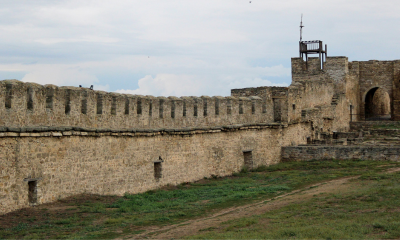

Guarding the Inner Fortress

Instructor: Anse Aysha Fazil

Type: Short Course

Method of Delivery: Online via Zoom

Term: Fall 2026

Course Dates: Oct. 19 – Nov. 21, 2026

Class Days: Th

Class Times: 7:00 – 8:00 PM CT

$100.00 or $25.00 / month for 4 months

Choose a Payment Plan
    • 4 interest-free payments $25.00/month

Course Information

Course Description

This course explores the Islamic science of spiritual purification (Tazkiyah). Adults will learn to protect their inner sanctuary using Imam Al-Ghazali’s Marvels of the Heart (Aja’ib al-Qalb). The curriculum connects classical theology with practical tools for modern emotional regulation.

Course Learning Outcomes

By the end of this course, students will be able to:

  • Explore Imam al-Ghazali’s Aja’ib al-Qalb as a map of the inner world.
  • Develop practical tools for emotional regulation, self-awareness, and spiritual resilience.
  • Strengthen the ability to protect the inner sanctuary (ḥirāsat al-qalb) from distortions, agitation, and modern stressors.
  • Practice murāqabah (watchfulness) as a daily discipline for self-awareness.
  • Translate spiritual insights into daily habits, relational practices, and ethical decision-making.
  • Analyze al-Ghazali’s conceptualization of the heart as an epistemic organ and compare it with modern theories of cognition and emotion.

Course Schedule

# Topic  Description
1 The Heart as the Locus of Knowing
  • The heart (qalb) as the centre of perception, moral discernment, and spiritual intelligence.
  • Ghazali’s distinction between physical heart, spiritual heart, and metaphorical heart.
  • The modern crisis of attention and fragmentation.
2 The Inner Sanctuary: What Are We Protecting?
  • Ghazali’s metaphor of the heart as a fortress.
  • The idea of ḥirāsah (guarding) and murāqabah (watchfulness).
  • Emotional dysregulation as a breach in the sanctuary.
3 Forces Within: The Nafs, Shayṭān, and Angelic Inspirations
  • Ghazali’s four forces: nafs, qalb, ʿaql, rūḥ.
  • How impulses arise and how they can be redirected.
  • Modern parallels: cognitive distortions, emotional hijacking.
4 Diseases of the Heart in a Modern Context
  • Classical diseases: envy, arrogance, heedlessness, ostentation.
  • Modern manifestations: comparison culture, performative identity, burnout, worship of the self (the I, I, I culture).
  • Ghazali’s diagnostic method: tracing symptoms back to root causes.
5 Living with a Guarded Heart
  • Ghazali’s vision of the illuminated heart.
  • Sustaining spiritual clarity in a noisy world.
  • Relational ethics: how a purified heart transforms a community.

Requirements

This course is open to women ages 17 and above.

Registration Information

Registration Fee

$100.00

Course materials are not included.

Late Registration Fee None
Registration Deadline November 10, 2026
Course Access Ends July 31, 2027
Important:
Registration fees are non-refundable and non-transferable. Before enrolling, please review the Registration Fees & Policies

Questions?
Contact registration@rabata.org

Technology Requirements

To ensure a successful online learning experience, all students must have regular access to a personal computer and reliable high-speed internet. Courses at Ribāṭ University are delivered through Canvas and may include video lectures, interactive discussions, digital readings, and multimedia assignments.
Students are responsible for maintaining the technology needed to participate fully.

Minimum Technical Requirements

Computer:
A desktop, laptop, or similar device manufactured within the last five years and capable of running current software and updates. Students should not rely solely on a phone, as coursework requires a full computer interface and functionality.
Operating System:
The computer operating system should be kept current with all recommended security updates and upgrades.
Internet:
A high-speed broadband connection with a minimum speed of 5 Mbps download and 2 Mbps upload.
Web Browser:
A current version of Chrome, Firefox, Safari, or Microsoft Edge.
Software:
Microsoft Office, Google Workspace, or Apple productivity applications for word processing,
presentations, and spreadsheets; a PDF reader such as Adobe Acrobat; and updated antivirus and security software.
Multimedia:
A functional webcam, microphone, and speakers or headset for participating in live sessions and assessments.

Technology Skills

Students should be comfortable with basic computer operations, including using email, browsing the internet, uploading and downloading files, and navigating an online learning platform. Training resources and orientation will be provided for students who need additional guidance.

Additional Notes and Technical Support

  • Students are expected to check course announcements and email regularly.
  • Technical support is available for login issues, course access, and basic troubleshooting.

For technical assistance, select Help from your Canvas course page or email techsupport@rabata.org

Related Courses