
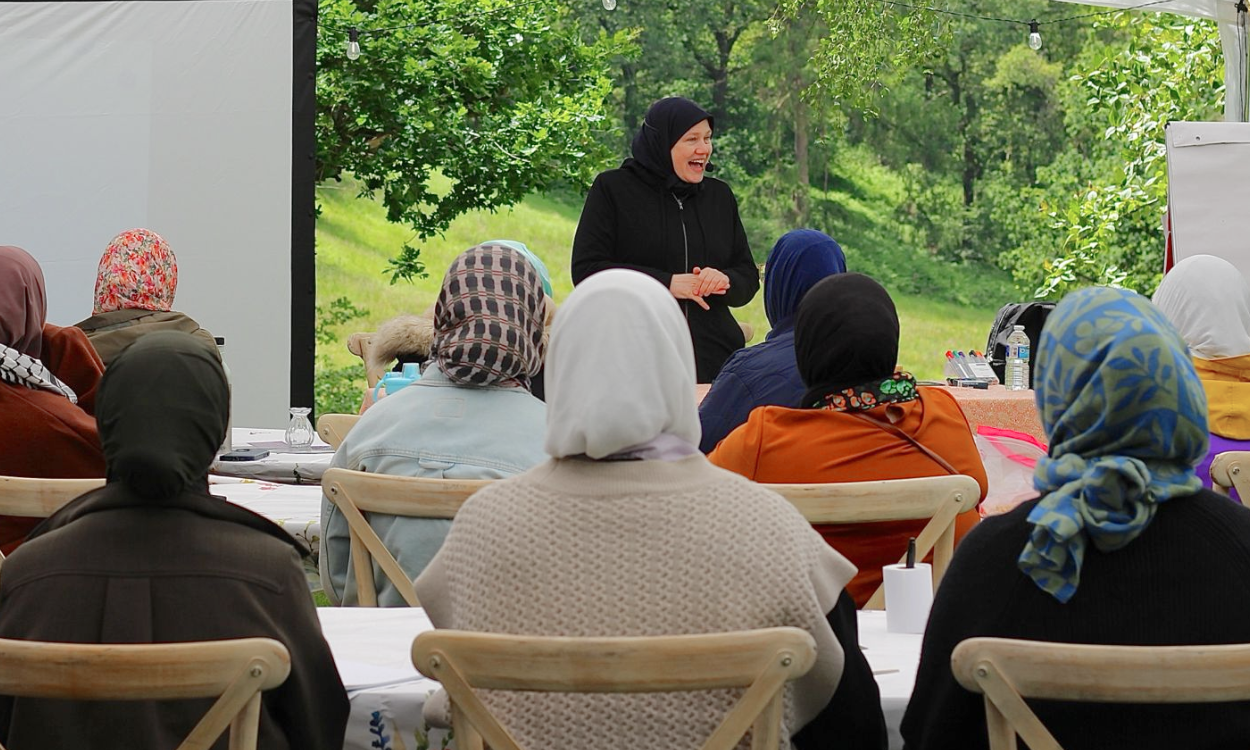

Fall 2026 – Anchored Leadership: Self, Service, and Sacred Trust

Course Code: BLD 1001

Instructor: Anse Afshan Malik

Credit: 3 Credits

Method of Delivery: Online via Zoom

Term: Fall 2026

Course Dates: Sept. 15 – Dec. 17, 2026

Class Days: TTh

Class Times: 9:00 – 10:30 AM CT

$450.00 or $112.50 / month for 4 months

Course Information

This is a 3-credit course that carries the academic commitment, workload, and tuition associated with university-level study. Please review the course details and tuition information carefully before registering. If completed with a passing grade, the credits may be eligible towards a future degree or certificate program.

Course Description

Islamic leadership is intrinsically developed through the idea that a leader has to hold herself to a higher standard and be held to a more disciplined level of accountability. This course will provide a guided discovery on how to govern oneself as they move into leadership roles in their organizations and learn how to balance the power and influence they develop in a responsible, ethical, and holistic manner. Students will study the nafs and use tools to track and formulate an individual plan of healthy leadership.  

This course will provide a foundational study of leadership qualities and professional development strategies to uplift students, especially women of color, in their capacity to become well rounded and well informed stewards of their work. The focus of this course will be to review Prophetic leadership qualities and review role models from Islamic history and the modern world who have made an impact on their community efforts. Professional development will include a series of assessments for self-evaluation and study. 

Course Learning Outcomes

By the end of this course, students will be able to:

  • Identify and explain foundational leadership theories, including authoritarian, servant, utilitarian, authentic, and Islamic leadership models.
  • Articulate the concept of anchored leadership as a leadership theory rooted in amānah, accountability, and ethical thinking.
  • Evaluate their own leadership tendencies through structured self-assessment and habit analysis.
  • Apply Prophetic leadership qualities to real-world leadership scenarios.
  • Analyze leadership examples from political, community, and contemporary Muslim contexts.
  • Respond to ethical dilemmas using Islamic moral reasoning and leadership theory.
  • Demonstrate basic problem-solving skills related to conflict, power, and decision-making.
  • Communicate leadership ideas clearly and respectfully in written and oral formats.

Course Prerequisites

This course is open to women ages 17 and above.

Course Materials

Students are responsible for purchasing all required textbooks before the start of class.
Ribāṭ textbooks are available at the Rabata Bookshop

Required Readings

  • Al-Azami, Muhammad ﷺ: 11 Leadership Qualities That Changed the World
  • Selected excerpts from al-Ghazālī, Inner Dimensions of Islamic Practice (Canvas)
  • Selected excerpts from Authentic Leadership: Rediscovering the Secrets to Creating Lasting Value, Bill George (Canvas)
  • Selected excerpts from Servant Leadership: A Journey into the Nature of Legitimate Power and Greatness, Robert K. Greenleaf (Canvas)
  • Selected excerpts from Utilitarianism, John Stuart Mill (Canvas)
  • Selected excerpts from Leadership: Theory and Practice, Peter G. Northouse (Canvas)
  • Selected excerpts from Leadership: The Power of Emotional Intelligence, Daniel Goleman (Canvas)

Additional readings may be shared through Canvas


Registration Information

Registration Fee

$450.00

Course materials are not included.

Late Registration Fee An additional $20.00 beginning September 11, 2026, if seats remain available
Registration Deadline September 28, 2026
Auditing Fee An additional $5.00
Course Access Ends January 10, 2027
Important:
Registration fees are non-refundable and non-transferable. Before enrolling, please review the Registration Fees & Policies

Questions?
Contact registration@rabata.org

Attendance Policy

Students are expected to attend all scheduled class sessions and participate actively in their learning.
Consistent attendance supports academic success and helps maintain a collaborative classroom environment.
If an absence is unavoidable, students are responsible for communicating with their instructor, reviewing
missed material, and completing any assigned work.

Technology Requirements

To ensure a successful online learning experience, all students must have regular access to a personal
computer and reliable high-speed internet. Courses at Ribāṭ University are delivered through Canvas and may include video lectures, interactive discussions, digital readings, and multimedia assignments.
Students are responsible for maintaining the technology needed to participate fully.

Minimum Technical Requirements

Computer:
A desktop, laptop, or similar device manufactured within the last five years and capable of running
current software and updates. Students should not rely solely on a phone, as coursework requires a full computer interface and functionality.
Operating System:
The computer operating system should be kept current with all recommended security updates and upgrades.
Internet:
A high-speed broadband connection with a minimum speed of 5 Mbps download and 2 Mbps upload.
Web Browser:
A current version of Chrome, Firefox, Safari, or Microsoft Edge.
Software:
Microsoft Office, Google Workspace, or Apple productivity applications for word processing,
presentations, and spreadsheets; a PDF reader such as Adobe Acrobat; and updated antivirus and
security software.
Multimedia:
A functional webcam, microphone, and speakers or headset for participating in live sessions and assessments.

Technology Skills

Students should be comfortable with basic computer operations, including using email, browsing the internet, uploading and downloading files, and navigating an online learning platform. Training resources and orientation will be provided for students who need additional guidance.

Additional Notes and Technical Support

  • Students are expected to check course announcements and email regularly.
  • Technical support is available for login issues, course access, and basic troubleshooting.
For technical assistance, select Help from your Canvas course page or email techsupport@rabata.org

Related Courses