
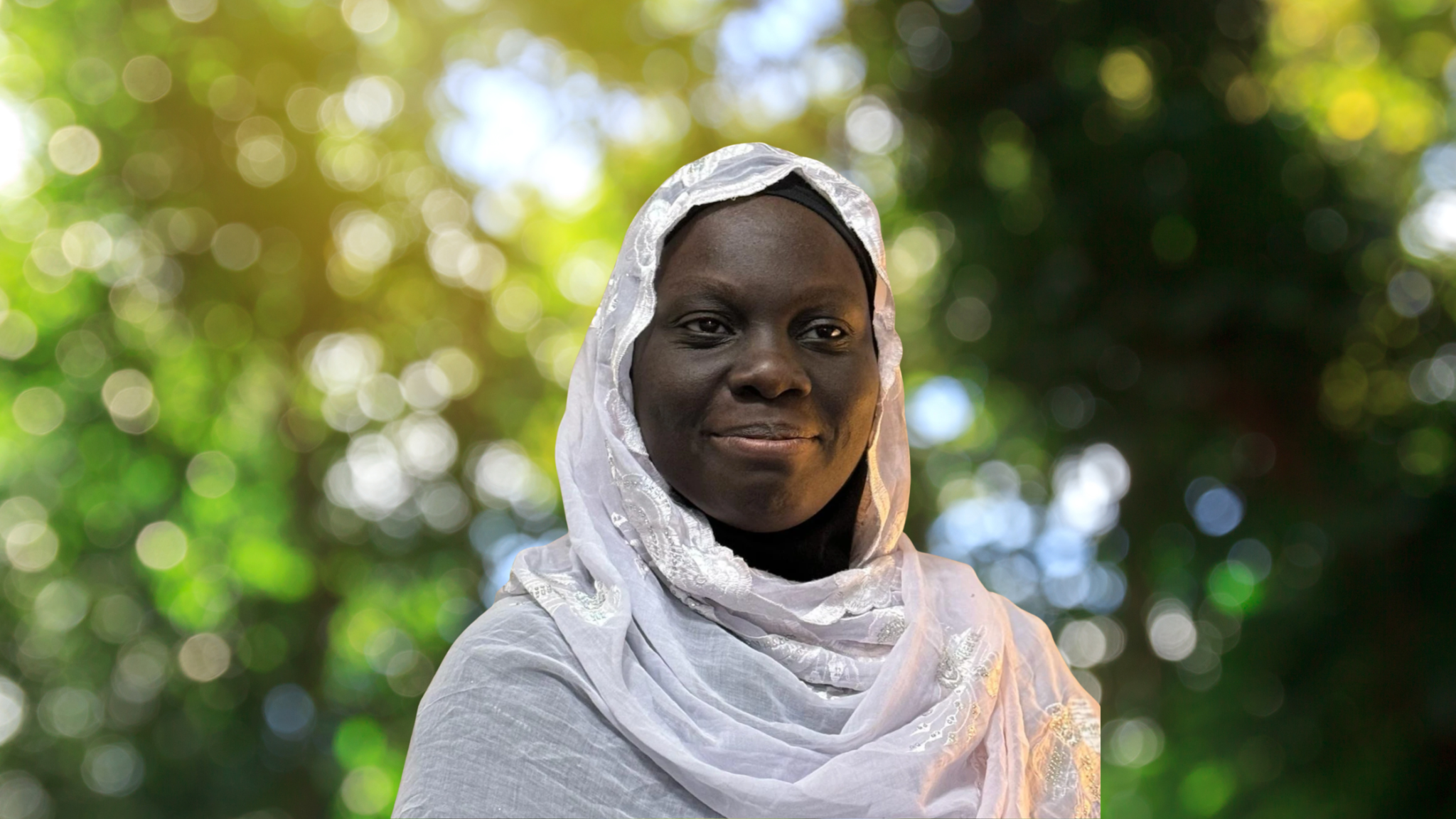
Tell us a little about yourself: your experience as a student, your areas of study interest, what you love about teaching, what are you excited about teaching at Ribāṭ.
I did my undergrad as a young person in my twenties, but then I went to graduate school in my mid-forties and I’m just completing a doctorate as I turn fifty. So, as a student, I would say my experiences were quite different between studying as a young person or at high school and as an older person who has a family.
And at one point, in our home, four of us were in college. My eldest daughter was working on her master’s, my second was in her fourth year of her degree, my third was in her freshman year, and I was working on my doctorate.
My studies as a young person were pretty straightforward. I was very focused on studying the deen at the time, and I had many opportunities. I lived in Cambridge, England, which was brimming with amazing local teachers, so I would go to their classes. And I also enjoyed my degree too.
I wasn’t spending lots of time in the library, because I wanted time to go study Islam. In the late nineties, you could not find a degree in the university space that satisfied both, so I picked a degree that would give me the time to study on the side.
I studied ophthalmic optics with business studies, and I thoroughly enjoyed it, but since it wasn’t too demanding, I had enough time to study tajwīd, Arabic, fiqh, and Quran. I really enjoyed that.
One of the things that you all get to benefit from is that you’re at Ribāṭ University. You don’t have to do one, then the other and find different spaces to thrive. You can do all of this in one institution, and that is an immense blessing, mashallah.
What do you love about teaching?
One course I teach at RU is on power, history, and the American story, and one of the reasons I developed this class is that I was trying to understand how power works in this nation and what role history and narrative have in how we understand ourselves and how we understand the world.
I felt that understanding this and then applying the ethical teachings of the Prophet ﷺ can help us navigate the modern world that we live in. This is the reason why I developed this particular class. My interest really is understanding that this faith isn’t meant to be refracted.
We get to live the full spectrum of our faith. Being able to design a course that brings all of that together—history, present-day and past disparities, economics, and the criminalization of poverty—and juxtaposes it with what Islam teaches us. What is the role of zakat? How does Islam see wealth? How does Islam see poverty? Are these things inherently good or inherently bad? Because our society will tell us, yes. It gives us certain narratives about what is good and what is bad, but there is more to understanding the world around us than the parameters that our societies often give us.
That’s one of the reasons why having this deen is such a blessing because it actually tells us how to understand what is right. How do you understand what is wrong? How do we deal with ambiguities? How do we navigate the different spaces that we find ourselves in? All of the things I love about getting to teach is being able to bring all of this and all of ourselves to this learning space and to this teaching space, alhamdulillah.
My areas of study would include wealth flow in society, understanding these structures around us, understanding the systemic structures that exist that are often invisible. History is a great love of mine. Sīra is an area that I deeply, deeply love, along with the shamāʾil.
What brought you to Ribāṭ?
Shaykha Zaynab al-Ansari’s mother told me about a pilot course back in 2012.
I was pregnant with my daughter, Fatima, who’s thirteen now, and I decided to take the class, and I really enjoyed it. I deeply love and respect Anse Tamara’s scholarship, her knowledge, and her wisdom, but one of the things that drew me as a teacher is her pedagogy.
It’s the way she teaches—the way the course is designed, the kind of assignments that one does, the discussions in class. I felt that this was just amazing. Then I went to a program where she was teaching, and she came in and while I worked with the children in the program, I was just mesmerized because the way that she teaches is a whole lesson in itself.
Obviously, what’s being taught is a lesson, but the way it’s being taught made me very attracted to Ribāṭ. It is not just the content of what we learn, which is extremely important, and bringing together the whole picture, but also the way our teachers teach and just really give students different kinds of experiences so that this becomes lived; it becomes embodied knowledge as opposed to something that just remains intellectual.
What’s one lesson that has stayed with you throughout your studies?
When I was in college, I was really taken by those who were leaving their university studies to go study overseas. I told my Arabic teacher at the time about this, and she told me that when you start something you should complete it. So, I did.
In different spaces throughout the years, that has stuck with me. Throughout my work over the years, I approached my work with the understanding that I made a commitment to it, and I would need to see it through with iḥsān. I am so grateful for that lesson.
What’s a book you recommend to every student?
I believe everybody is reading and engaging with the Quran, and the shamāʾil is something that I do love deeply. The reading of the shamāʾil is really important and having a physical copy of that in one’s library that you can read through often is important.
There’s a book that I love called Fugitive Pedagogy by Dr. Jarvis Givens about Carter G. Woodson, and it’s based on the experiences of one of his students. Carter was the father of education within the Black community, and he set up a network of educators where he provided information, curriculum, lesson plans, and research for teachers to use in their classroom. He creates this within a system, in particular the education system, that was teaching a certain narrative around Blackness, which is a narrative that centers deficiency and falsehoods about Black history and Black contemporary life.
Teachers had to teach within the schools that were controlled by the board of education, so he would provide them an alternative curriculum, and then the teachers would find ways to teach the alternative curriculum while being compliant with the official curriculum. For Muslims today who are struggling with the different curriculum restrictions or trying to figure out how to navigate the spaces, I think there are so many lessons in the story of Carter G. Woodson that all students could benefit from.
I also really love Sanitizing History by Dr. Tariq El-Amin. It is really important for students to read because it gets us thinking about how history is taught, what is assumed, what is ignored, and what we are sometimes just unaware of.
What’s something students might be surprised to learn about you?
My favorite subject is math and I love teaching it. If I wasn’t a history teacher, I’d probably be a math teacher.
Share one piece of advice for students beginning their learning journey.
Patience. Turn to Allah, make dua, and understand that it can be difficult for any stage of life you’re in. As women, it can be a lot of juggling. We are dealing with raising children or helping with children around us; we have parents we are also supporting in different ways; many of us have jobs that we are navigating. There is a lot we carry and we do, all along with studying. Recognize that it is a gift to be studying and a gift to be juggling these things. Have gratitude for being in this space of study, especially with the support and dua of phenomenal women from all around the world.
Is there a project you’re currently working on that you’re excited about?
I am working on a textbook about Muslim American heroes. We will tell their stories, tell the story of American history through their story, and share about their character traits. It will integrate ELA, Social Studies themes, and map work. Please keep this effort in your dua.