
Bachelor of Arts
Associate of Arts
Graduate Degrees
Lifelong Learning
Ijāza Certifications

Riverstead: Arabic
Ribāt Riverstead offers a spiritually enriching path into the Arabic language, from learning letters, to parsing grammar, to reading Arabic texts.
Program Objectives
This program prepares Muslim women to engage with Islamic texts and grow in language fluency within a flexible, welcoming environment grounded in classical learning and supported by modern tools.
 Arabic Language Proficiency
- Read, write, listen, and speak Arabic with accuracy
- Apply core grammatical rules correctly
- Recognize and construct verb forms and sentence patterns
 Engage with Sacred Texts in Arabic
- Understand vocabulary, grammar, and linguistic features in Quran and Hadith
- Read the Quran with fluency and comprehension
 Arabic Language Tools and Resources
- Continuously develop language and understanding through standard and root dictionaries
- Engage with digital tools to support independent reading and translation
Riverstead: Arabic
Ribāt Riverstead offers a spiritually enriching path into the Arabic language, from learning letters, to parsing grammar, to reading Arabic texts.
This is the first course in the Ribāṭ Arabic Language Program. It is designed to equip learners with the skills to read (phonetically decode) and write the Arabic script with vowels and provide them with a range of high frequency vocabulary which they can use in their reading of Quranic texts and to offer greetings in Arabic.
This is the second module in the Novice level. This course involves an introduction to the basics of Arabic grammar of nouns, with an emphasis on building learners’ reading skills and basic vocabulary knowledge to allow them to read the Quran and recognize key words and phrases, as well as introduce themselves.
This module introduces students to the basics of forming sentences in Arabic. This includes verbal and nominal sentences. Students will be introduced to the methods for conjugating simple verbal roots. By the end of the module, learners will be able to read and understand simple texts containing familiar vocabulary, as well as construct their own simple nominal sentences about themselves, their families, and their homes. Learners will expand their repertoire of high frequency vocabulary, both general and Quranic to equip them with the ability to pick out and translate words and phrases in a range of authentic texts.
This is the first module of the Intermediate Beginner band. In this level, students will be introduced to constructing verbal sentences in the past, present, and future tenses. They will work on developing this skill to include positive and negative sentences, and learn how to ask questions. Students will also learn how to tell the time and will cover vocabulary relating to schedules and their daily routines.
This is the second module of the Intermediate Beginner band. In this level, students will build on their knowledge of nominal sentences by learning how to negate them and situate them in the past tense. They will also learn how to express possession and how to identify and construct dual and plural nouns. They will expand their vocabulary by learning to talk about careers, food and drink, and the human body.
This is the final module of the Intermediate Beginner band. In this level, students will build on their knowledge of verbs and verbal sentences by exploring different tenses and moods. This includes the imperative, the subjunctive, and future negation, as well as object pronouns. This will equip students with an ability to read and understand more complex texts. Students will learn how to express emotions as well as their hopes and aspirations using vocabulary found in classical/ liturgical as well as more modern texts.
This is the first module of the Intermediate Middle band. In this level, students will expand their knowledge of verbs through an introduction to hollow roots and the 10 verb forms. This will equip them with the skills to use a root dictionary. They will also learn how to construct and describe opposites, and building on their knowledge of vocabulary related to the human body, they will learn how to discuss issues around health and wellness using vocabulary found in classical/ liturgical, as well as more modern, texts.
This is the second module of the Intermediate Middle band. In this level, students will focus in depth on the 10 verb forms. They will learn how to recognize and construct each form, as well as infer the meaning of each. They will build on their knowledge of tenses and moods by applying them to each of the forms. This will ensure they are able to look up words in an Arabic root dictionary with ease, increasing the scope of their translation skills as well as vocabulary.
This is the final module of the Intermediate Middle band. In this level, students will expand their knowledge of nominal and verbal sentence construction and translation by covering particles, active and passive participles, adverbs, relative pronouns, and be introduced to passive verbs. They will explore the topic of geography, learning how to talk about different cultures and parts of the world using vocabulary found in classical/ liturgical, as well as more modern, texts.
This is the first module of the Intermediate High band. In this level, learners will start to explore more complex features of the Arabic language. This includes the construction of noun-number phrases, diptotes, doubled roots and the jussive, as well as how to recognize and construct passive expressions. Students will apply their knowledge to reading about and discussing the topic of religion and religious practices and will explore how to justify their thoughts and opinions using vocabulary found in classical/ liturgical, as well as more modern, texts.
This is the second module of the Intermediate High band. In this level, learners will expand the range of verbs they can conjugate by adding weak-end roots and examining the orthography of the letter hamza. They will also learn how to construct different types of conditional sentences, and noun-number phrases for numbers 11-99. They will also explore exceptions to the usual rules for case endings by learning about a wider range of diptotes. Students will apply their knowledge of these constructions to the topics of art and literature in the Arab world and around the globe using vocabulary found in classical/ liturgical, as well as more modern, texts.
This is the final module of the Intermediate High band. In this level, learners will consolidate the knowledge and skills accumulated throughout the previous modules and expand their repertoire by examining the construction of exceptive sentences and noun-number phrases for numbers above 100. They will also build on their knowledge of weak-end roots by learning how to conjugate them in the different forms and construct active and passive participles from them. They will also learn about the case endings for the Five Nouns. Learners will apply their knowledge and skills to understanding and discussing the topics of history, political systems, and peace and conflict in the Arab world and around the globe, using vocabulary found in classical/ liturgical, as well as more modern, texts.
This is the first module of the Advanced Beginner band. In this level, learners will review, consolidate, and expand their grammatical knowledge through the reading, translation, and analysis of classical and authentic texts. They will revise syntactical rules and apply them to texts; work with nominal sentences and iḍāfa constructs; practice plurals and duals; refine their use of pronouns; and study the superlative and comparative. Learners will apply these skills using vocabulary found in classical/ liturgical, as well as more modern, texts.
This is the second module of the Advanced Beginner band. In this level, learners will continue to review, consolidate, and expand their grammatical knowledge through the reading, translation, and analysis of classical and authentic texts. They will revise morphology and apply it to texts; study tenses and moods and the verb forms; work with hollow and doubled verbs; and develop command of the masdar. Learners will apply these skills using vocabulary found in classical/ liturgical, as well as more modern, texts.
This course builds students’ Arabic reading proficiency by developing strategic reading skills and strengthening awareness of how meaning is constructed in authentic texts. Students focus on the function and translation of particles and verb–particle combinations, supported by guided use of corpus tools to explore real language usage. The course also expands grammatical range through adverbs of time and place, number expressions, and derived noun forms. Through scaffolded and independent reading practice, students apply these skills to unfamiliar texts and prepare for continued study at the advanced level.
This is the first module of the Advanced Middle level, focusing on the consolidation and expansion of Arabic grammatical knowledge through close reading, translation, and analysis of classical and authentic texts. Students engage in linguistic analysis of selected Quranic passages and study key grammatical structures. The course also introduces the history of the Quran’s compilation and the development of the Quranic script, strengthening students’ ability to apply advanced grammatical and analytical skills to new texts and preparing them for further advanced study.
This course strengthens advanced Arabic grammar and reading skills through a thematic study of the modern history of the Middle East. Students review key morphological structures while applying this knowledge to authentic modern Arabic prose. Readings trace major historical developments from the Ottoman period to the emergence of modern nation-states, emphasizing stylistic features and contextual interpretation. The course builds confidence in analyzing increasingly complex texts by integrating linguistic precision with historical understanding.
This course introduces students to the development of Arabic fiction from early narrative traditions to modern prose. Through guided reading, translation, and discussion of classical texts, folk literature, and modern novels and short stories, students explore how narrative style, language, and cultural context shape Arabic literary expression. The course builds skills in literary analysis and translation while also guiding students in writing an original short story in Arabic using studied narrative techniques.
This course introduces students to Arabic rhetoric (balāgha) through focused study of Quranic passages, classical tafsīr, and modern religious discourse. Students analyze rhetorical and stylistic features that shape meaning, persuasion, and interpretation, with particular attention to challenges of Quranic translation. Through close reading, translation, and applied writing and speaking tasks, the course builds advanced interpretive skills and culminates in the in applied writing and speaking tasks that integrate rhetorical analysis with contemporary religious expression.
This advanced reading course develops students’ Arabic proficiency through close study of Sīrah texts in the original language. Students engage with classical and modern sources on the life of the Prophet ﷺ through translation, lexical research, and historical analysis, strengthening fluency, accuracy, and interpretive skill. The course also examines how Sīrah narratives are constructed and transmitted, while introducing ethical uses of technology and AI to support deep engagement with Arabic texts.
This course develops students’ ability to read and analyze Arabic historical and geographical texts through focused regional case studies. Using authentic classical, medieval, and modern sources, students examine how geography, history, and culture are represented in Arabic writing and how these portrayals change over time. Emphasis is placed on close reading, contextual interpretation, and understanding how migration, historical encounters, and cultural exchange have shaped social, religious, and cultural diversity in Muslim-majority societies.
About the Ribāṭ Curriculum
Rooted in authenticity and guided by excellence, Ribāṭ University bridges Islamic tradition with contemporary scholarship. Every student receives a well-rounded liberal arts education grounded in faith, critical inquiry, and service.
Levels
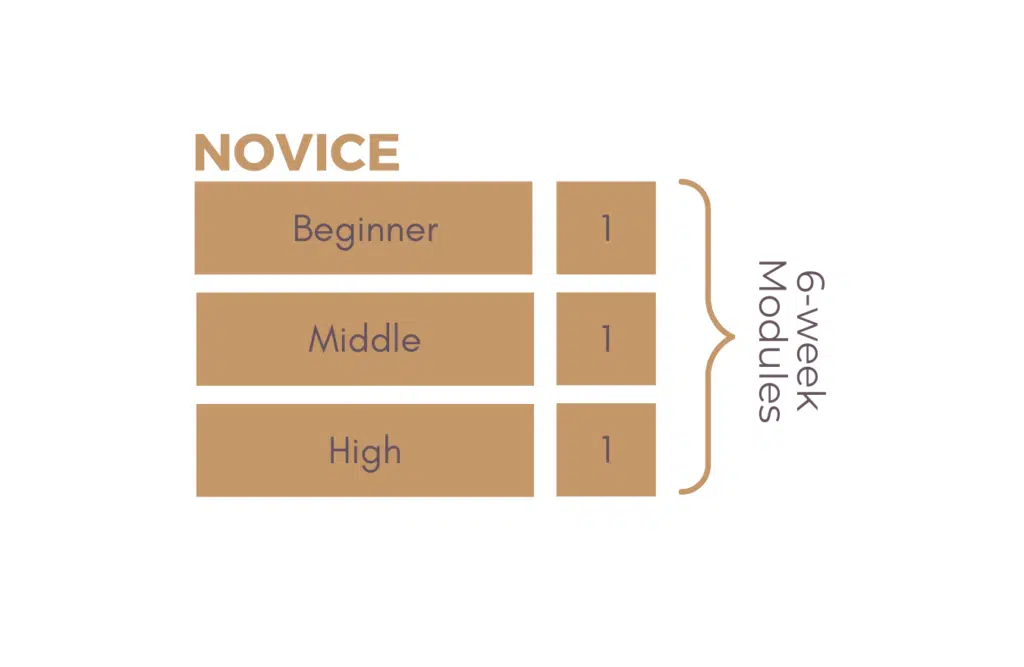
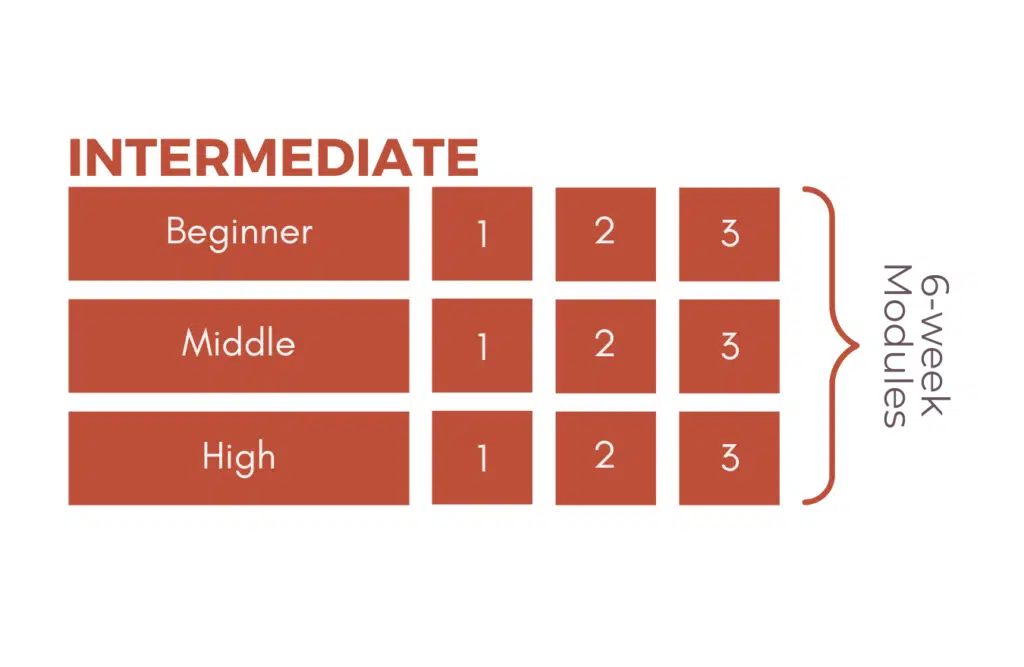
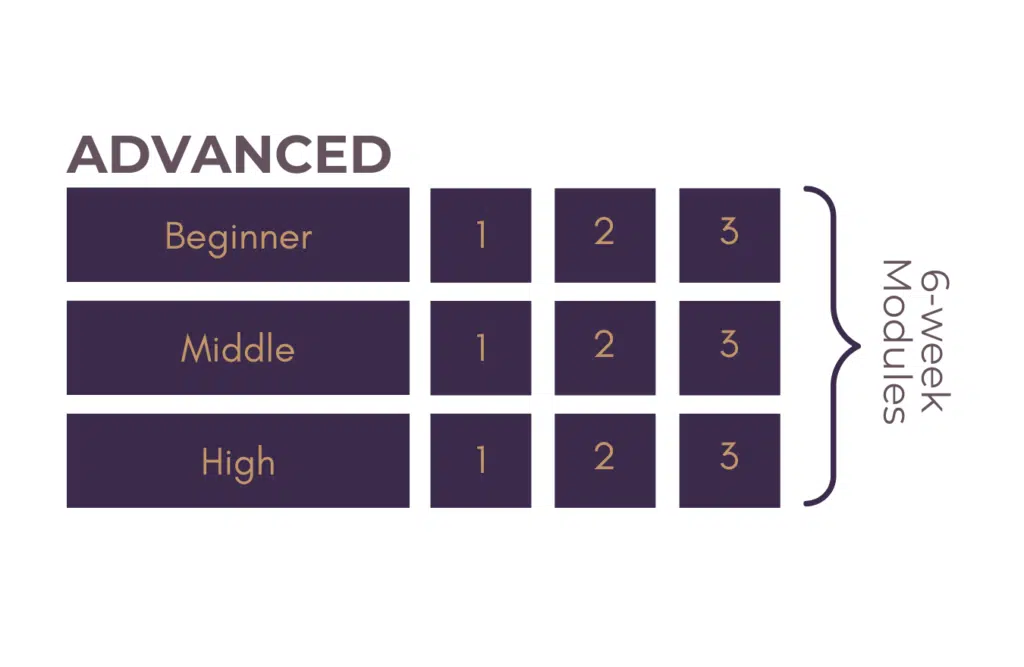
The Ribaat Arabic Language Program is structured into 3 levels:
- Novice, Intermediate, and Advanced, following the guidelines and benchmarks established by the American Council on the Teaching of Foreign Languages (ACTFL) to ensure high-quality and effective language learning.
Each of these levels is further split into 3 bands: Beginner, Middle, and High.
- A set number of modules will be required to progress from one band to the next, and to qualify for higher levels.
Course Format
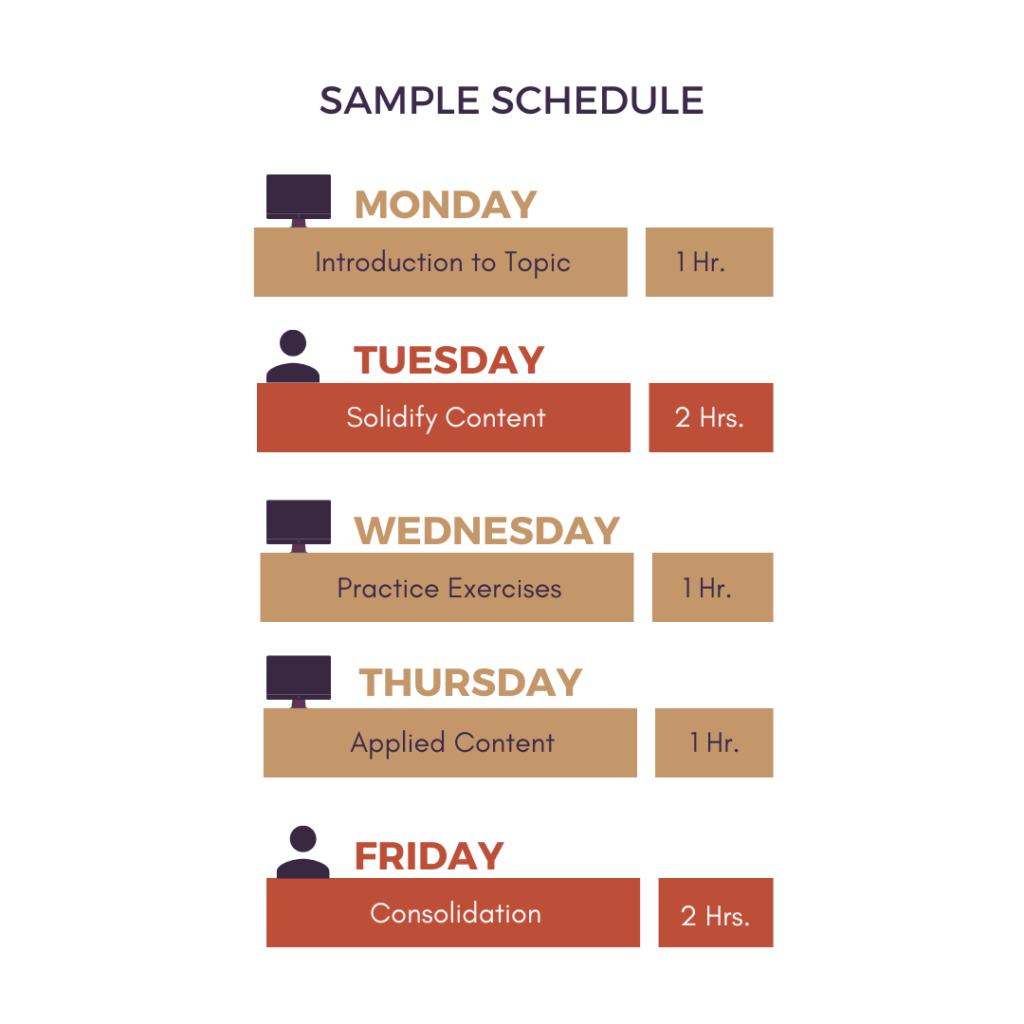
Ribaat Arabic program courses run in 6-week modules, with two modules offered each semester.
Each module includes:
- two synchronous classes of 1.5-2 hours each, with interaction
- three asynchronous sessions outside of class of 1 hour each
In total, the week will consist of 3-4 hours of synchronous class time, and approximately 3 hours of asynchronous class time.
Each module consists of weekly homework, exam, and final project.
About
Founded in 2013, Ribāṭ Riverstead (previously Ribaat Academic Institute) is an online space of lifelong learning for Muslim women around the globe that has reached more than 10,000 students across 90 countries. The program is designed to nurture and empower Muslim women through a structured curriculum that balances deep scholarship with practical application. Taught by qualified female scholars, these comprehensive courses guide students through the foundational and advanced fields of Islamic knowledge in 9 tracks of learning: ʿAqīda, Fiqh, Hadith, History, Quran: Tafsīr, Tajwīd, Tazkiya, Sīra, and Social Sciences. The curriculum provides a rich and well-rounded education that aligns with traditional Islamic scholarship utilizing modern methodologies. Understanding the Muslim woman’s needs, Ribāṭ Riverstead aims to make learning flexible, affordable, and attainable. Some Riverstead credits will transfer to degree programs. Students may connect with the admissions department to determine eligibility.
Have questions?
For more information or assistance, applicants may contact the Admissions Office at
 Email: admissions@rabata.org