
Bachelor of Arts
Associate of Arts
Graduate Degrees
Lifelong Learning
Ijāza Certifications
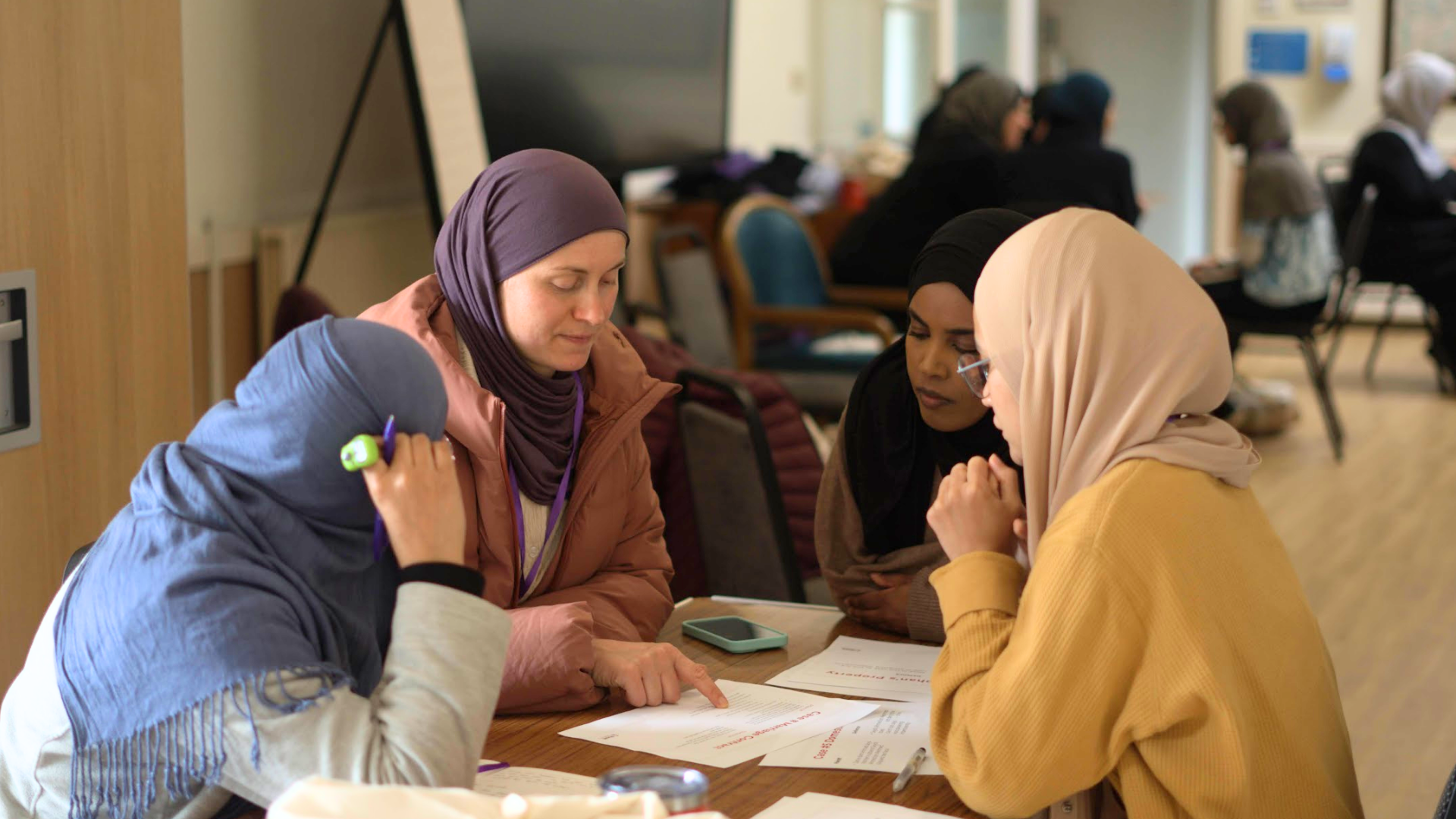
Bachelor of Arts in Literature, Writing, and Publishing
This program shapes Muslim women into discerning readers, engaging writers, and thoughtful editors who recognize that words are powerful.
What you’ll study:
- Global literary traditions across genres, to assess artistic merit and cultural impact
- Creative, academic, and professional writing to develop excellence in both creative and practical forms of writing
- The publishing industry, including editing, production, design and the ethics and impact of communication
What this degree prepares you for:
- Analyzing and producing written work with depth, precision and ethical responsibility
- Contributing meaningfully to literary, media, and publishing spaces with a disciplined approach to your craft
- Writing and publishing with an awareness of how words influence culture and public conversation
 Degree
Bachelor of Arts Degrees
 Required credits
120 Credit Hours
 Areas of Focus
Literature, Writing, Publishing
 Admissions Dates
Opens November 15, 2026
 Tuition Summary
Tuition and fee information is available here.
Program Objectives
Literary Depth
- Analyze major genres and subgenres within global literary traditions
- Evaluate the artistic, historical, and cultural significance of texts with nuance and insight
Writing Confidence
- Produce compelling and purposeful writing across creative and professional genres
- Refine your distinctive authorial voice shaped by your values
Principled Editorial and Publishing Practice
- Apply technical skills in editing, production, and dissemination
- Evaluate authorship and publication as acts of stewardship and responsibility
Admissions Requirements
We review your admission holistically, to understand your academic readiness, character, and commitment to learning. A holistic review refers to an applicant’s academic record, volunteer/ community service, optional exams submitted, awards and recognition, and perspectives that can contribute to the academic and spiritual goals of being a student at Ribāṭ University.
The bachelor’s degree programs application process include, but are not limited to:
Application basics
- Completed application
- A non-refundable fee of $35 submitted with the application
Academic records
- High school diploma, homeschool, GED or equivalent
- Transcripts and coursework grades
- Evidence of academic rigor where applicable (honors, AP, IB, A-levels, or college coursework)
- ACT/SAT scores are preferred but not required (please note without submitting these test scores, placement exams may be required when enrolling)
- Evidence of exceptional achievement, aptitude, or personal accomplishment not reflected in the academic record
- Participation in extracurricular activities related to intended major
- Strong commitment to community service, leadership, and educational involvement
Writing and recommendations
- Personal narrative essay and short responses
- Three to four email addresses for people who will provide a recommendation by submitting an online questionnaire. Referees can be personal, professional, academic, and/or community leaders.
If applicable
- ACT/SAT scores (optional)
- English proficiency results for non-native speakers (TOEFL, IELTS, or Duolingo English Test results)
Course Outline
This foundational course surveys major literary genres and subgenres while introducing key concepts in literary theory, effective writing, and the publishing process. Students explore how form, purpose, and audience shape literary expression and publication, engaging texts through both artistic and ethical lenses grounded in Islamic worldview.
This course immerses students in the art of storytelling through the imaginative worlds of speculative and romantic fiction. Using an exposure-based approach, students learn the craft of writing by reading widely across genres—fantasy, science fiction, romance, and literary fiction—and then creating original works in response. Through guided analysis and fun experimentation, they uncover how skilled authors build characters, worlds, and emotional resonance. A workshop environment fosters imitation, feedback, and refinement, helping students develop technique and craft. By the end of the course, students will have developed both a critical understanding of genre and a practiced ability in imaginative writing.
This course explores the craft of nonfiction storytelling through memoir, biography, travel writing, social commentary, essays, journalism, critiques, speeches, and more. Students will learn to blend factual accuracy with narrative technique, crafting engaging prose rooted in truth and ethical reflection. Emphasis is placed on voice, research, and structure, culminating in a major nonfiction project that illuminates real-world people, places, and experiences.
This course explores the power of poetic language across traditions—from classical sonnets to modern poetry, slam poetry, and song lyrics. Students will analyze how rhythm, form, and sound shape meaning, while crafting their own original pieces in both written and performance formats. Emphasis is placed on creative experimentation, emotional expression, and the impact of poetry as a lived, shared art.
This course examines literature for young readers, from timeless fairy tales to modern YA novels, graphic novels, and more, exploring how these works shape and reflect ideas about childhood, identity, and imagination. Through critical reading and creative writing, students will analyze themes, structure, and illustration, while also crafting original stories for young audiences. Emphasis is placed on both artistic expression and cultural insight.
This course explores how Western literature has portrayed Muslims and Islam from the medieval era to today, examining texts that reflect both fascination and distortion. Through close reading and critical theory, students will analyze themes of Orientalism, identity, and power in works by Chaucer, Shakespeare, Rushdie, and others. Emphasis is placed on literary representation as a site of cultural construction and critique.
This course surveys the evolution of Arabic literature from its poetic roots to the rise of the modern novel, focusing on key texts and genres in translation. Students will explore pre-Islamic verse, Quranic influence, classical prose, and modern literary movements, with attention to cross-cultural translation and exchange. Emphasis is placed on literary development, historical context, and cultural impact.
This course develops the essential skills of revision and editing across creative, academic, and professional contexts. Students learn to evaluate writing at multiple levels—from structural and developmental editing to sentence-level line and copy editing. Special emphasis is placed on accuracy in transliteration, correct citation and referencing systems (including footnotes and endnotes), and maintaining authorial voice while improving clarity and precision. Through hands-on editing practice, peer workshops, and applied projects, students gain the editorial judgment necessary to polish their own work and to prepare manuscripts for publication in both print and digital formats.
This course explores fiction as a vehicle for cultural critique and transformation. Students will also engage with literary theory to develop a critical lens for interpreting fiction and understanding its power to shape thought and culture. Through reading and writing stories that center themes of identity, revolution, and social justice, students will examine how literature can challenge norms and inspire change. Emphasis is placed on crafting compelling narratives with rich characters, thoughtful structure, and purposeful voice. A supportive workshop environment nurtures creative risk-taking and technical mastery.
This course deepens craft across poetry, fiction, and nonfiction. Students will study genre conventions and cross-genre techniques through close reading and guided practice. They will draft, workshop, and revise original work; analyze mentor texts; and experiment with form, structure, voice, and point of view. Emphasis is placed on constructive critique, storytelling, and revision.
This course explores the book as a visual and artistic medium, tracing manuscript traditions from illuminated Qurans to medieval and Asian works. Students will study calligraphy, illustration, and page design across cultures, while engaging in hands-on creative projects. Emphasis is placed on the intersection of text, beauty, and meaning in the book as both artifact and art form.
Students apply what they have learned about genre, reading, and writing to the business and process of publishing. Students will explore editorial development, design, marketing, and distribution across traditional, independent, and digital models. Emphasis is placed on industry roles, publishing economics, author branding, and emerging trends, preparing students to navigate the publishing world with insight and strategy.
This course prepares students to produce clear writing for technical and digital platforms that is tailored for diverse audiences. Students will create professional documents—reports, manuals, proposals, guides, blogs, and websites—while developing skills in visual communication, SEO, and digital content strategy. Emphasis is placed on usability, formatting, precision, accessibility, and real-world application preparing students for impactful communication across fields.
This course equips students with a rich array of rhetorical and literary tools to enhance clarity, persuasion, and impact. Through analysis of powerful language in speeches, essays, poetry, and media, students will master techniques like metaphor, repetition, and allusion. Emphasis is placed on strategic use of rhetoric in writing and speaking across academic, professional, and public contexts.
This course is a practical application of the skills and knowledge learned. Students will complete a writing project in their chosen genre and publish in their chosen method.
Graduation Requirements
Major Requirements 42 credits
Core Competencies 33 credits
Language Requirement 9 credits (or equivalent)
Minor15 credits
Electives 21 credits
Total required credits 120 (minimum)
Have questions?
For more information or assistance, applicants may contact the Admissions Office at
 Email: admissions@rabata.org