
By Anse Afshan Malik
The arrival of Muharram may catch us by surprise. There are no fireworks or countdown clocks, and there isn’t any social pressure to make grand resolutions. One day it is Dhul-Hijja, and the next we find ourselves staring at the dawn of a new Hijri year.
For us at Ribāṭ University, Muharram also arrives during a season of new beginnings. Students prepare for a new semester, register for new courses, and seek new opportunities to grow. The convergence of these two calendars provides us a thoughtful avenue to consider what we want to accomplish and who we hope to become.
The Islamic calendar is dated from the hijra of the Prophet ﷺ and his companions from Mecca to Medina. The hijra represents the courage to move toward purpose, even when the path forward is uncertain. The Prophet ﷺ and his companions left behind their homes, livelihoods, and beloved city because there came a moment when familiarity conflicted with fulfilling their purpose. Mecca was dear to them, but Allah was more dear. Their story reminds us that growth may require us to leave behind what is familiar.
At Ribāṭ University, the pursuit of knowledge is not separate from spiritual growth. Every course, every discussion, and every assignment presents an opportunity to cultivate intellectual excellence alongside wisdom, discipline, and humility.
Educators, psychologists, and leadership scholars increasingly recognize that lasting growth is rooted in identity. Sustainable change is brought to fruition when we begin to understand who we are becoming. Every intention and action becomes an unspoken endorsement for the person we wish to become. How we view ourselves shapes our future.
“I am a student. I am a seeker. I am a luminary.”
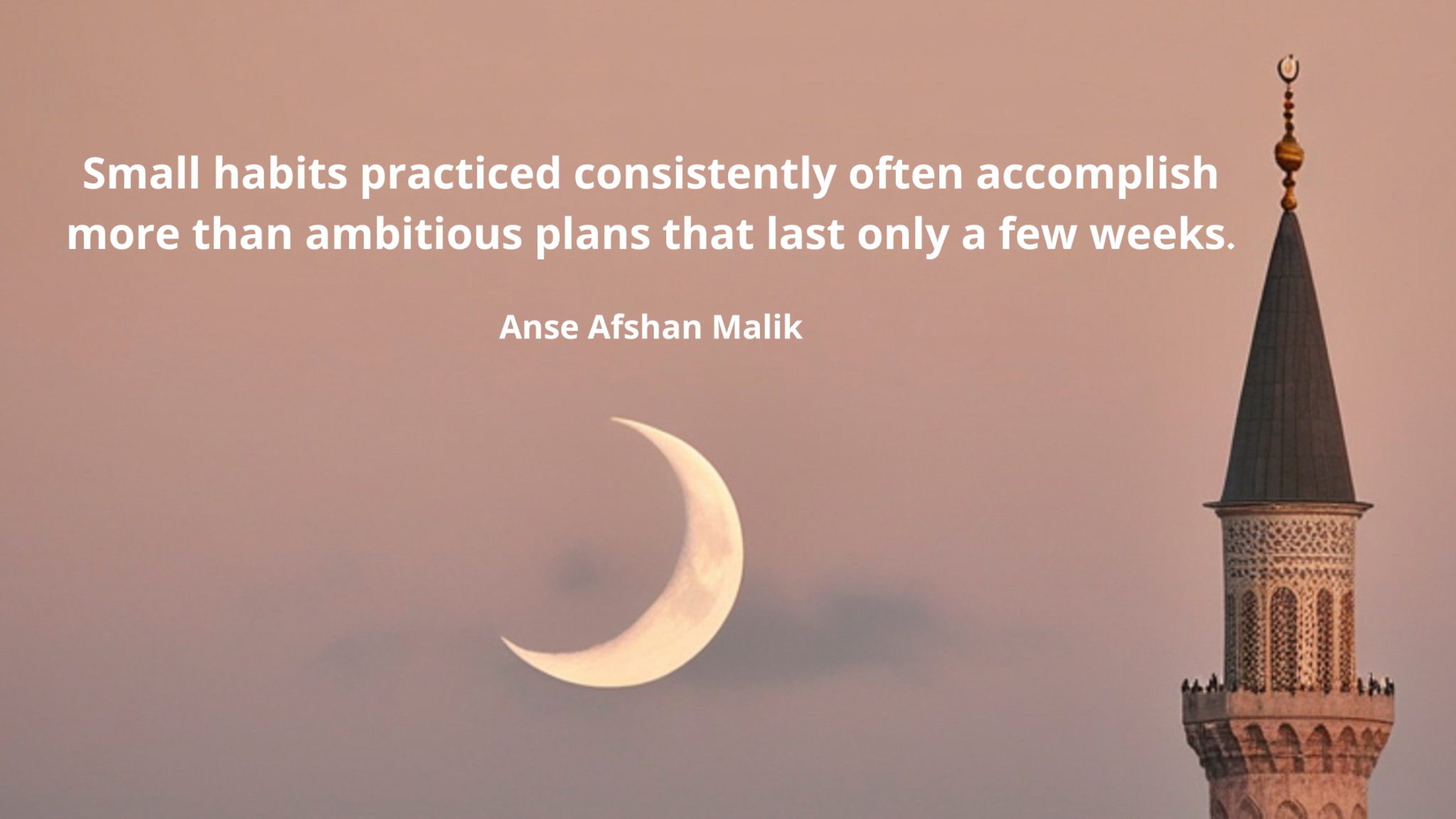
Identity is formed through small, repeated actions. As we begin a new Hijri year and a new academic term, this is an ideal time to establish a few habits that will support both our academic life and our spiritual growth. Consider setting aside a dedicated time each week to review course materials before assignments become urgent. Create a study space that encourages focus. Commit to attending class on time, taking thoughtful notes, and engaging fully in discussions. Pair your academic goals with spiritual goals. Begin each study session with a dua and set aside a few moments after Fajr to review your lessons. Small habits practiced consistently often accomplish more than ambitious plans that last only a few weeks.
Muharram also offers an opportunity to take inventory of what may be hindering our growth. Are there distractions consuming hours that could be invested in learning? Are there habits that weaken our focus, discipline, or connection to Allah? Just as the companions left behind what stood between them and their purpose, we can identify one or two obstacles that we are ready to leave behind this year.
The sunna directs our attention to one of the most underappreciated opportunities for change: the early morning hours. Modern productivity books celebrate what successful people do before breakfast, but Muslims have long been taught the blessing of beginning the day before the rest of the world rouses from sleep. The Prophet ﷺ made dua for baraka in the early morning hours. Before dawn, the believer has access to the special secrets of qiyam, tahajjud, Quran, dua, and dhikr. In those moments, the believer exercises a different kind of courage: the courage to rise when comfort calls, to turn toward Allah before turning toward the demands of the day, and to prioritize what is eternal before what is urgent. Before the notifications begin and the to-do lists pile up, there is an opportunity to nourish the heart with Divine remembrance.
One of the greatest lessons of the hijra is that reliance upon Allah is never passive. The Prophet ﷺ trusted Allah completely, but he also planned meticulously. He kept the migration secret, selected trusted companions, hired an expert guide, arranged for information gathering, and assigned specific responsibilities to those assisting him. Every possible means was taken before placing the outcome in Allah’s hands. This balance between effort and trust remains one of the defining characteristics of the believer. We make the plan, establish the routine, set the alarm, prepare the budget, organize the schedule, and then trust Allah with the results.
The pursuit of knowledge requires this same balance. A student cannot earn a degree by intention alone. She must read, write, study, participate, and persevere. Yet she also learns that the deepest fruits of education cannot be measured by grades alone. Knowledge becomes meaningful when it transforms the heart, refines character, and prepares a person to serve others. The believer studies with effort and strives with excellence, while trusting Allah with the outcome.
As we enter a new Hijri year, let us ask ourselves who we want to become. What quality do we want to strengthen? What knowledge do we need to seek? What habits do we need to build? What distraction, unhealthy habit, or excuse do we need to leave behind? What course, skill, or discipline will move us closer to our goals? What kind of student, community leader, and servant of Allah do we hope to become?
Whether we are beginning our first course, returning to our studies, or continuing a lifelong journey of seeking knowledge, Muharram reminds us that every act of becoming begins with a single step taken for the sake of Allah. A year from now, the accumulated weight of those small steps may bring us somewhere entirely new.
May Allah make this Muharram a beginning filled with baraka, purpose, and sincere growth, and may He help us migrate away from what dims our light and toward what will illuminate us in this world and the next.