
Bachelor of Arts
Associate of Arts
Graduate Degrees
Lifelong Learning
Ijāza Certifications
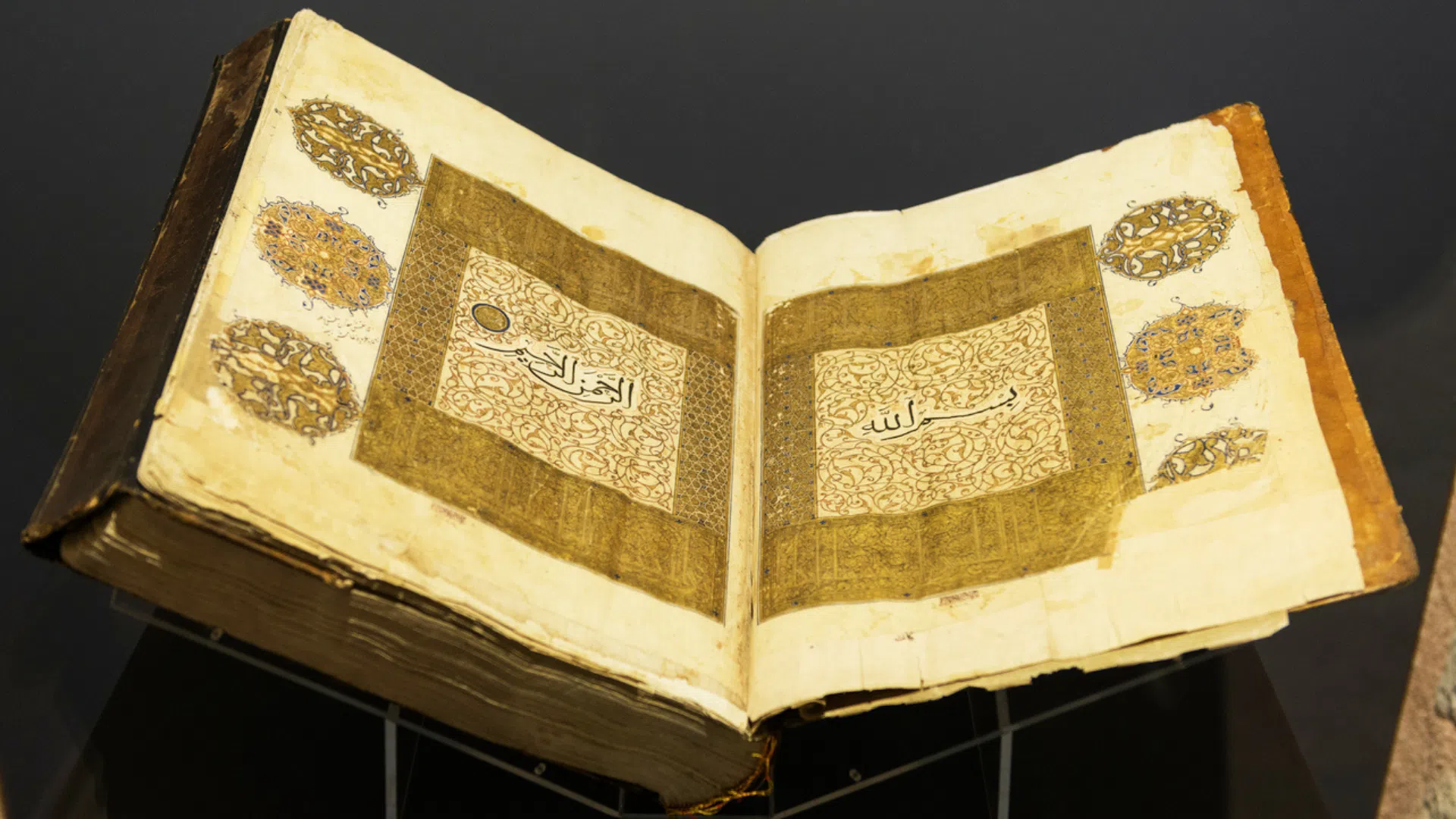
Riverstead: Quran
For women seeking to read the Quran with fluency, beauty, and understanding, Ribāṭ Riverstead offers step-by-step support through every stage of the journey—from recognizing Arabic letters to reciting with tajwīd.
Program Objectives
This program prepares Muslim women to read the Quran with fluency, beauty, and understanding from qualified women instructors.
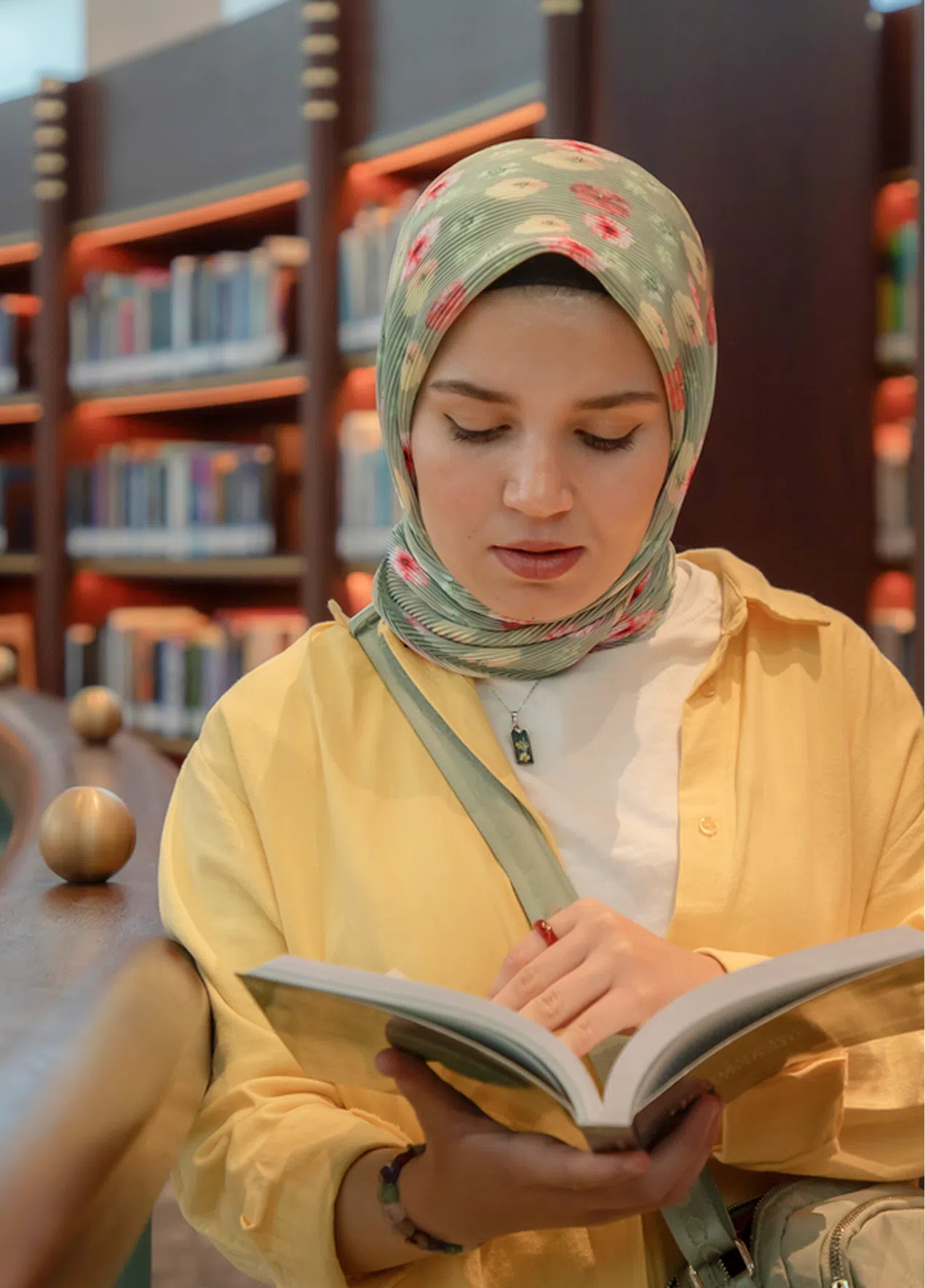
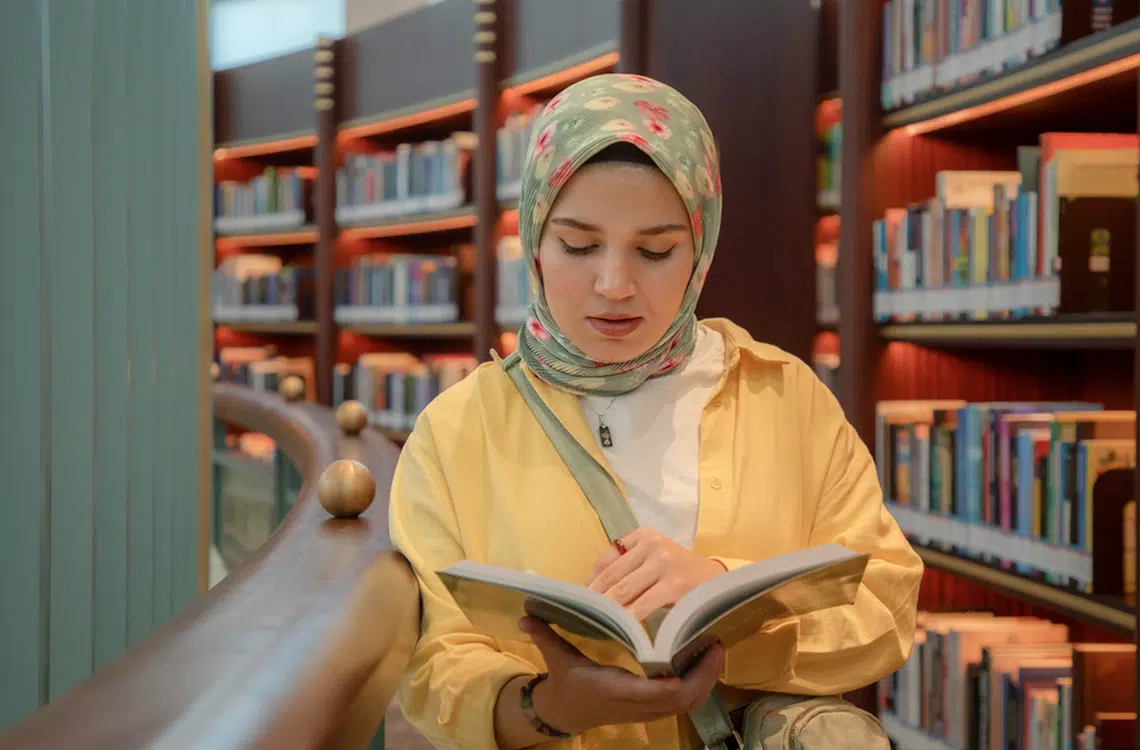
 Fluency in Quran Reading and Recitation
- Recognize letters and pronounce them correctly
- Read with fluency
Apply tajwīd rules consistently
 Memorize Portions of the Quran
- Recite from memory with correct pronunciation and proper tajwīd
 Spiritual Connection
- Reflect on the meaning of the Quran
- Practice disciplined recitation with consistency within the teacher-student transmission model
Riverstead: Quran
Ribāṭ Riverstead courses courses focus on correct pronunciation, rhythm, and flow, while nurturing spiritual presence and love for the Quran. Taught by qualified female instructors, classes are paced with compassion and designed for real life—inviting students to approach the Book of Allah ﷻ with peace, reverence, and joy.
This is a practical course providing students the opportunity to:
- Practice reading the Holy Quran
- Master the skill of decoding Quranic text
- Learn the types of Arabic sounds and how to pronounce them correctly
- Be introduced to the science of tajwīd
These skills will be put into practice in class with the instructor, and students will gain strategies to practice at home. By the end of this course, students should be able to recognize all of the Arabic letters and vowel sounds, to connect words, and to stop on them, all while improving their general reading speed and fluency. Students will meet 3 times a week, 75% of which will be reading practice from the primer or from short suras (chapters) of the Quran. The other 25% will be learning new concepts.
This is a practical course for students to continue working on fluency. Students will be matched with a teacher one-on-one, meeting 3 times a week to continue reading from Juz’ 30 to achieve fluency in recitation. Students will also have daily reading assignments that will support them in increasing reading speed and achieving fluency and accuracy in recitation.
This is a study of the science of tajwīd accompanied by an instructor-led recitation of Juzʾ ʿAmmā. This is a two-part course:
- Students will gain an understanding of introductory tajwīd concepts (including points of articulation–makhārij–and letter attributes–ṣifāt) during weekly online sessions with the instructor.
- Students will work with a recitation teacher in small groups during two additional weekly sessions in which they will practice the theory learned in class. By the end of the course, students will read through Juzʾ ʿAmma, applying the rules of tajwīd they have learned and pronouncing each letter correctly.
Building upon concepts taken in Tajwīd Part 1, students will complete the study of the rules of tajwīd, accompanied by an instructor-led recitation of Juzʾ Tabārak. This is a two-part course:
1. Students will gain an understanding of the rules of tajwīd (proper pronunciation of the Holy Quran) during weekly online sessions with the instructor.
2. Students will work with a recitation teacher in small groups during two additional weekly sessions in which they will practice the theory learned in class. By the end of the course, students will read through Juzʾ Tabārak, applying the rules of tajwīd and pronouncing each letter correctly.
An accelerated study of the science of tajwīd. In this course, students will gain an understanding of all tajwīd concepts (proper pronunciation of the Holy Quran, including points of articulation–makhārij–and letter attributes–ṣifāt) during weekly online sessions with the instructor. This course is a fast-paced review of tajwīd rules for those who have mastered the practice of recitation and need to learn or relearn the theory.
Students will also join a bi-weekly ḥalaqa in which they will work with a recitation teacher. Students will recite madrasa style in small groups, preparing about a juzʾ per week starting from the beginning of the Quran.
In the Quran Khitma Project, students will recite the Holy Quran from Surat al-Fātiḥa to Surat al-Nās to their assigned tajwīd instructors, as a preparation and foundation for beginning with memorization. This is a two-part course:
1. Students will attend a weekly online session with the instructor to follow up on their progress, work together to achieve consistent Quran reading habits, and receive inspiration about the Holy Quran.
2. Each student will be paired with a certified tajwīd teacher, either online or locally, with whom she will work one-on-one. This part of the course will be complete when the student has read through the Holy Quran from start to finish with her assigned tajwīd teacher, having demonstrated the ability to apply the rules of tajwīd to the standardized and acceptable level.
Under the loving and uplifting guidance of a certified tajwīd teacher, students will work together toward a complete reading of the Quran with correct tajwīd in this ḥalaqa-style course. Reciting half to one page at a time, students will build up fluency, receive real-time feedback, and feel confident in their ability to recite the Quran. With an emphasis on the practical application and refinement of tajwīd rules, this course is ideal for those seeking consistent practice, continued progress, and a supportive, blessed sisterhood dedicated to learning.
This is a self-paced memorization course; students will set a personal memorization target each term and recite to a tajwīd teacher. This is a two-part course:
1. Students will attend a weekly online session with the instructor to follow up on their progress and receive inspiration and tips on memorizing the Holy Quran, achieving effective memorization, and overcoming hurdles.
2. Each student will be paired with a certified tajwīd teacher online, with whom she will work one-on-one. This part of the course will be complete when the student has recited the amount agreed upon at the start of the term, having demonstrated the ability to apply the rules of tajwīd to the standardized and acceptable level.
3. Optional biweekly meeting times will be available for students for extra memorization practice and encouragement.
Over the span of two terms, students will work with the instructor to memorize the last juz’ of the Holy Quran in a small-group setting. Class time will provide active support from the instructor in the memorization process, including group and individual activities, tajwīd practice, memorization review, and memorization quizzes. Students will gain memorization strategies and tools, and daily homework assignments will help them to solidify and retain what they have memorized. Students will memorize at the pace of about one page each week, with the goal of completing all of Juz’ 30 by the end of the second term. Live attendance is required to ensure full benefit.
Over the span of two terms, students will work with the instructor to memorize the 29th juz’ of the Holy Quran in a small-group setting. Class time will provide active support from the instructor in the memorization process, including group and individual activities, tajwīd practice, memorization review, and memorization quizzes. Students will gain memorization strategies and tools, and daily homework assignments will help them to solidify and retain what they have memorized. Students will memorize at the pace of about one page each week, with the goal of completing all of Juz’ 29 by the end of the second term. Live attendance is required to ensure full benefit.
Over the span of two terms, students will work with the instructor to memorize the 28th juz’ of the Holy Quran in a small-group setting. Class time will provide active support from the instructor in the memorization process, including group and individual activities, tajwīd practice, memorization review, and memorization quizzes. Students will gain memorization strategies and tools, and daily homework assignments will help them to solidify and retain what they have memorized. Students will memorize at the pace of about one page each week, with the goal of completing all of Juz’ 28 by the end of the second term. Live attendance is required to ensure full benefit.
About
Founded in 2013, Ribāṭ Riverstead (previously Ribaat Academic Institute) is an online space of lifelong learning for Muslim women around the globe that has reached more than 10,000 students across 90 countries. The program is designed to nurture and empower Muslim women through a structured curriculum that balances deep scholarship with practical application. Taught by qualified female scholars, these comprehensive courses guide students through the foundational and advanced fields of Islamic knowledge in 9 tracks of learning: ʿAqīda, Fiqh, Hadith, History, Quran: Tafsīr, Tajwīd, Tazkiya, Sīra, and Social Sciences. The curriculum provides a rich and well-rounded education that aligns with traditional Islamic scholarship utilizing modern methodologies. Understanding the Muslim woman’s needs, Ribāṭ Riverstead aims to make learning flexible, affordable, and attainable. Some Riverstead credits will transfer to degree programs. Students may connect with the admissions department to determine eligibility.
Have questions?
For more information or assistance, applicants may contact the Admissions Office at
 Email: admissions@rabata.org