
Bachelor
Graduate
Certificates
Sanad Center

Bachelor of Arts in Arabic Language, Literature and Linguistics
This program prepares Muslim women to attain advanced Arabic fluency, literary depth, and linguistic insight. It is designed to give students the clarity required to engage with Arabic as a global language of faith, scholarship, and culture.
What you’ll study:
- Advanced Arabic language structure, including grammar, morphology, rhetoric, and linguistic analysis
- Classical and contemporary Arabic literature within historical, devotional, and global contexts
- Linguistic diversity, dialects, sociolinguistics, and applied pedagogy
What this degree prepares you for:
- Engaging with Arabic texts and discourse, with depth, precision and ethical responsibility
- Teaching, analyzing, and representing Arabic across diverse educational and cultural contexts
- Advancing the study and understanding of Arabic literature
- Pursuing further certification and serious academic studies
 Degree
Bachelor of Arts Degrees
 Required credits
120 Credit Hours
 Areas of Focus
Communication, Arabic Language, Literature, Linguistics and Sociolinguistics, Cultural and Media Literacy
 Admissions Dates
Opens November 15, 2026
 Tuition Summary
Tuition and fee information is available here.
Request Information
About degree programs, admissions, financial aid and more.
Program Objectives
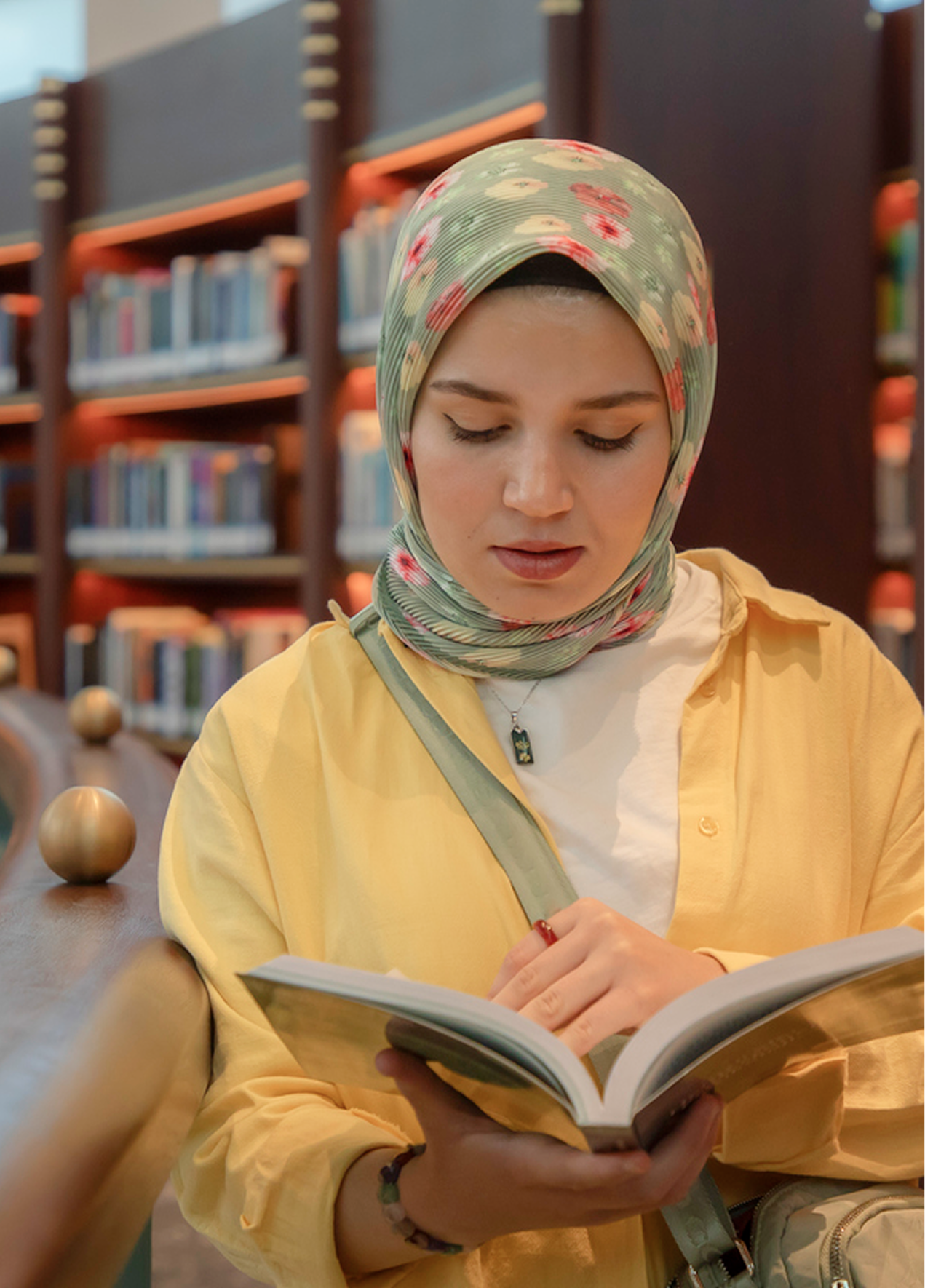
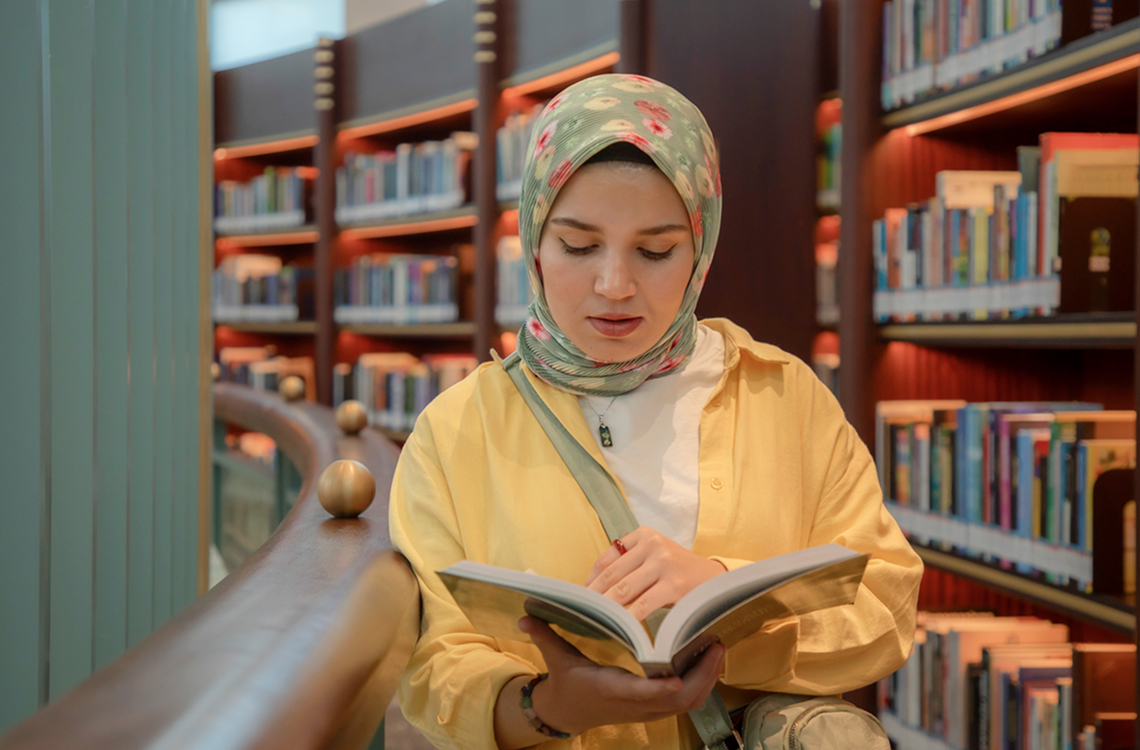
Confidence in Arabic Language Communication
- Master grammatical, morphological, and rhetorical structures in written and spoken Arabic
- Build confidence in oral and written Arabic
- Attain Intermediate-High proficiency (ACTFL) or higher
Cultural and Media Literacy
- Critically analyze Arabic literature, media, and film within evolving cultural and social narratives
- Produce discourse that reflects linguistic precision and cultural understanding
Theoretical and Sociolinguistic Understanding
- Integrate theoretical understanding of Arabic phonology, morphology, syntax, and semantics
- Develop awareness of diglossia, dialect variation, and media language across societies
- Explore how language constructs meaning, identity, and social narrative.
 Mastery in Arabic Literary Analysis
- Interpret classical and modern Arabic texts using linguistic and rhetorical analysis
- Identify themes, stylistic features, and historical context with intellectual rigor
Admissions Requirements
We review your admission holistically, to understand your academic readiness, character, and commitment to learning. A holistic review refers to an applicant’s academic record, volunteer/ community service, optional exams submitted, awards and recognition, and perspectives that can contribute to the academic and spiritual goals of being a student at Ribāṭ University.
The bachelor’s degree programs application process include, but are not limited to:
Application basics
- Completed application
- A non-refundable fee of $35 submitted with the application
Academic records
- High school diploma, homeschool, GED or equivalent
- Transcripts and coursework grades
- Evidence of academic rigor where applicable (honors, AP, IB, A-levels, or college coursework)
- ACT/SAT scores are preferred but not required (please note without submitting these test scores, placement exams may be required when enrolling)
- Evidence of exceptional achievement, aptitude, or personal accomplishment not reflected in the academic record
- Participation in extracurricular activities related to intended major
- Strong commitment to community service, leadership, and educational involvement
Writing and recommendations
- Personal narrative essay and short responses
- Three to four email addresses for people who will provide a recommendation by submitting an online questionnaire. Referees can be personal, professional, academic, and/or community leaders.
If applicable
- ACT/SAT scores (optional)
- English proficiency results for non-native speakers (TOEFL, IELTS, or Duolingo English Test results)
Course Outline
This is the first course in the Ribāṭ Arabic Language Program. It is designed to equip learners with the skills to read (phonetically decode) and write the Arabic script with vowels and provide them with a range of high frequency vocabulary which they can use in their reading of Quranic texts and to offer greetings in Arabic.
This is the second module in the Novice level. This course involves an introduction to the basics of Arabic grammar of nouns, with an emphasis on building learners’ reading skills and basic vocabulary knowledge to allow them to read the Quran and recognize key words and phrases, as well as introduce themselves.
This module introduces students to the basics of forming sentences in Arabic. This includes verbal and nominal sentences. Students will be introduced to the methods for conjugating simple verbal roots. By the end of the module, learners will be able to read and understand simple texts containing familiar vocabulary, as well as construct their own simple nominal sentences about themselves, their families, and their homes. Learners will expand their repertoire of high frequency vocabulary, both general and Quranic to equip them with the ability to pick out and translate words and phrases in a range of authentic texts.
This is the first module of the Intermediate Beginner band. In this level, students will be introduced to constructing verbal sentences in the past, present, and future tenses. They will work on developing this skill to include positive and negative sentences, and learn how to ask questions. Students will also learn how to tell the time and will cover vocabulary relating to schedules and their daily routines.
This is the second module of the Intermediate Beginner band. In this level, students will build on their knowledge of nominal sentences by learning how to negate them and situate them in the past tense. They will also learn how to express possession and how to identify and construct dual and plural nouns. They will expand their vocabulary by learning to talk about careers, food and drink, and the human body.
This is the final module of the Intermediate Beginner band. In this level, students will build on their knowledge of verbs and verbal sentences by exploring different tenses and moods. This includes the imperative, the subjunctive, and future negation, as well as object pronouns. This will equip students with an ability to read and understand more complex texts. Students will learn how to express emotions as well as their hopes and aspirations using vocabulary found in classical/ liturgical, as well as more modern, texts.
This is the first module of the Intermediate Middle band. In this level, students will expand their knowledge of verbs through an introduction to hollow roots and the 10 verb forms. This will equip them with the skills to use a root dictionary. They will also learn how to construct and describe opposites, and building on their knowledge of vocabulary related to the human body, they will learn how to discuss issues around health and wellness using vocabulary found in classical/ liturgical, as well as more modern, texts.
This is the second module of the Intermediate Middle band. In this level, students will focus in depth on the 10 verb forms. They will learn how to recognize and construct each form, and infer the meaning of each. They will build on their knowledge of tenses and moods by applying them to each of the forms. This will ensure they are able to look up words in an Arabic root dictionary with ease, increasing the scope of their translation skills and vocabulary.
This is the final module of the Intermediate Middle band. In this level, students will expand their knowledge of nominal and verbal sentence construction and translation by covering particles, active and passive participles, adverbs, relative pronouns, and be introduced to passive verbs. They will explore the topic of geography, learning how to talk about different cultures and parts of the world using vocabulary found in classical/ liturgical, as well as more modern texts.
This is the first module of the Intermediate High band. In this level, learners will start to explore more complex features of the Arabic language. This includes the construction of noun-number phrases, diptotes, doubled roots and the jussive, as well as how to recognize and construct passive expressions. Students will apply their knowledge to reading about and discussing the topic of religion and religious practices and will explore how to justify their thoughts and opinions using vocabulary found in classical/ liturgical, as well as more modern, texts.
This is the second module of the Intermediate High band. In this level, learners will expand the range of verbs they can conjugate by adding weak-end roots and examining the orthography of the letter hamza. They will also learn how to construct different types of conditional sentences and noun-number phrases for numbers 11-99. They will also explore exceptions to the usual rules for case endings by learning about a wider range of diptotes. Students will apply their knowledge of these constructions to the topics of art and literature in the Arab world and around the globe using vocabulary found in classical/ liturgical, as well as more modern, texts.
This is the final module of the Intermediate High band. In this level, learners will consolidate the knowledge and skills accumulated throughout the previous modules and expand their repertoire by examining the construction of exceptive sentences and noun-number phrases for numbers above 100. They will also build on their knowledge of weak-end roots by learning how to conjugate them in the different forms and construct active and passive participles from them. They will also learn about the case endings for the Five Nouns. Learners will apply their knowledge and skills to understanding and discussing the topics of history, political systems, and peace and conflict in the Arab world and around the globe, using vocabulary found in classical/ liturgical, as well as more modern, texts.
This foundational course strengthens students’ grasp of essential Arabic grammar through focused study of sentence formation, verb conjugation, and noun-adjective agreement. Designed for returning learners and heritage speakers, the course emphasizes accuracy and fluency through drills, analysis, and practical application. Students will gain confidence reading and constructing early-intermediate Arabic texts.
This advanced preparatory course deepens students’ mastery of Arabic grammar, focusing on complex structures such as irregular verbs, case endings, particles, and embedded clauses. Through text analysis and writing practice, students refine their linguistic precision and fluency. Emphasis is placed on readiness for advanced study in Arabic language, literature, and scholarship.
This course surveys the evolution of Arabic literature, from pre-Islamic poetry and Quranic influence to philosophical texts, didactic genres, and the rise of the modern novel. Students explore key literary movements and works in translation, gaining insight into the cultural and historical forces that have shaped Arabic literary expression across time.
This course explores how languages are learned, with a particular focus on Arabic as a second and heritage language. Students examine key theories of first and second language acquisition, as well as cognitive, emotional, and learner-specific factors that influence language development. The course also introduces a range of instructional methods and teaching strategies relevant to diverse learning contexts. Emphasis is placed on connecting research to practice, equipping students to deliver effective, learner-centered Arabic instruction that supports the needs of diverse learners.
This course introduces students to key linguistic concepts through the lens of the Arabic language, covering phonetics, morphology, syntax, semantics, and sociolinguistics. Students will explore the historical development of Arabic, analyze its sound and sentence structures, and compare Arabic and English grammatical frameworks. Emphasis is placed on both structural analysis and sociolinguistic variation, providing a strong foundation for advanced linguistic study.
This course introduces students to the theory and practice of Arabic-English translation, blending conceptual frameworks with hands-on experience. Students explore translation strategies, ethical considerations, and historical movements, including the Abbasid translation era. Emphasis is placed on translating across genres with cultural sensitivity and developing tools for effective, responsible cross-linguistic communication.
This live, online course develops students’ fluency and expressive clarity in spoken Arabic through interactive discussions, role-plays, and presentations. Emphasis is placed on pronunciation, persuasive speaking, and adapting to different audiences. Real-time feedback and collaborative practice build confidence, preparing students to communicate effectively in academic and conversational settings.
This course strengthens students’ written Arabic through practice across diverse genres, including essays, letters, narratives, and digital formats. Emphasis is placed on clarity, tone, grammar, and audience awareness. With peer review and instructor feedback, students will refine their writing style and build confidence in communicating effectively across real-world contexts.
This course explores the linguistic and historical features of the Quran and hadith as foundations of Islamic tradition. Students examine the language, structure, and stylistic elements of Quranic and Hadith texts, alongside methods of preservation, transmission, and interpretation within Islamic intellectual history. Emphasis is placed on reading original Arabic sources and understanding the grammatical, textual, and historical dimensions of these sacred texts.
This course explores the diversity of Arabic dialects across regions, blending sociolinguistic theory with practical language skills. Students will examine dialectal variation, diglossia, and code-switching while building foundational comprehension in Levantine, Egyptian, North African, and Gulf dialects. Emphasis is placed on cultural context, structural comparison with MSA (Modern Standard Arabic), and real-world language use.
This course builds reading fluency and literary analysis skills through selected original texts from pre-Islamic to modern Arabic literature. Students will engage with poetry, prose, and philosophical writings, deepening their understanding of genre, style, and cultural context. Emphasis is placed on close reading, vocabulary development, and interpreting texts with insight and sensitivity.
This course immerses students in Arabic-language media, music, and cinema to enhance language skills and cultural literacy. Through analysis of films, lyrics, journalism, and digital content, students explore artistic expression, identity, and societal trends across the Arabic-speaking world. Emphasis is placed on listening comprehension, vocabulary development, and critical engagement with contemporary cultural forms.
This capstone course serves as the culminating academic experience for students majoring in Arabic Language, Literature, and Linguistics. Students will integrate and apply their knowledge through a project which demonstrates advanced proficiency in Arabic, critical engagement with literary texts, and an understanding of linguistic theory and analysis.
Graduation Requirements
Major Requirements 39 credits
Core Competencies 33 credits
Language Requirement 18 credits (or equivalent)
Optional Minor or Electives15 credits
Electives 15 credits
Total required credits 120 (minimum)
Admissions Contact
For more information or assistance, applicants may contact the Admissions Office at
 Email: admissions@rabata.org